
Identify a Clearwater Property Owner
Clearwater County publishes no standalone Assessor search box for owners. The best public starting point is the county's ArcGIS parcel service. It links mapped land to an owner string in one view. From there, the Assessor and Recorder offer the confirming records, such as the tax roll and deed records, that turn a map hit into a reliable answer about the owner of record.
- Locate the address or parcel in the Clearwater County parcel viewer. Save the parcel ID, owner string, situs, mailing field and deed clues.
- Ask the Clearwater County Assessor to confirm the owner of record and the date context for the roll entry.
- Compare the name with the grantee, the recipient, on the newest deed held by the Auditor/Clerk/Recorder.
- If the grantee is a company, search Idaho SOSBiz by exact name or file number. A trust or estate may need deed and probate context.
Clearwater's Ownership Map Fields
The county's ParcelOwnership layer exposes Owner1, Owner2 and OwnerStr, plus owner mailing fields, situs, value, last-sale, deed-reference and parcel fields. It is the richest public owner card the county offers. The field service itself is the official display of these records.
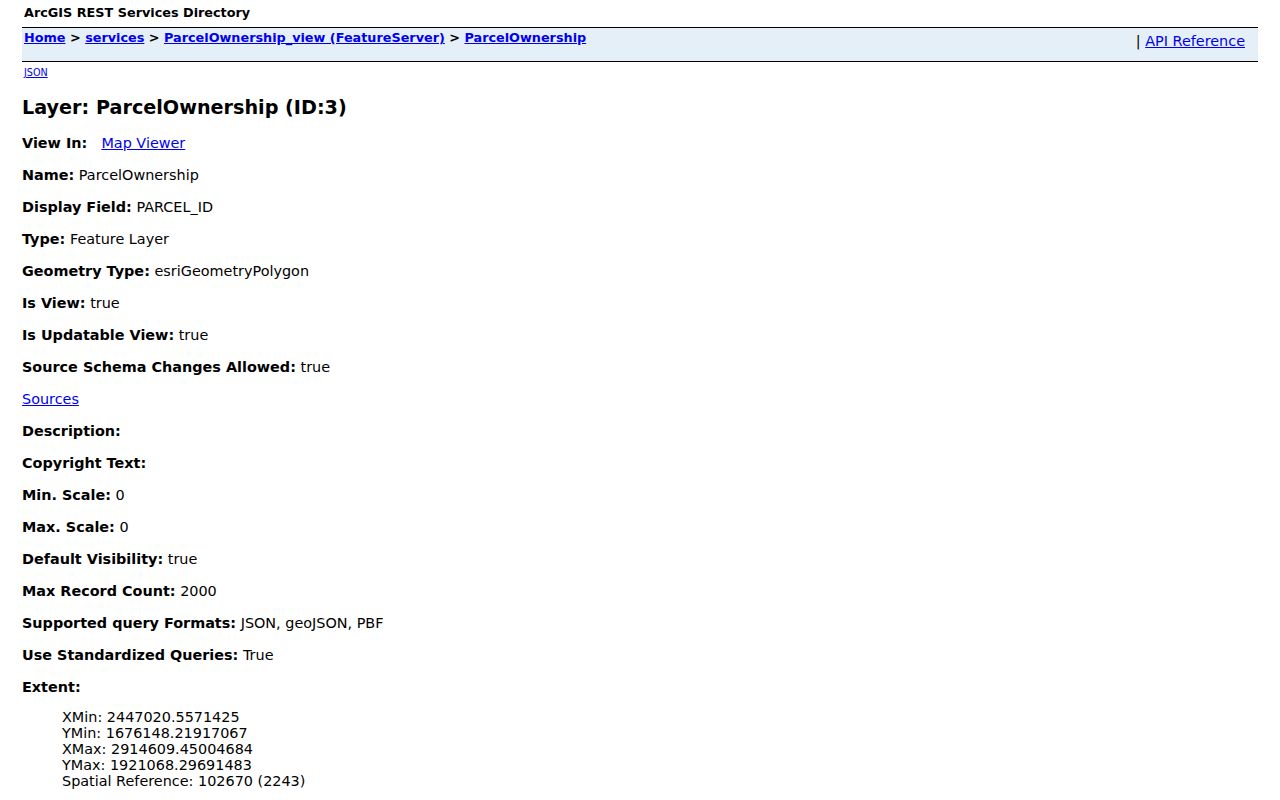
The card answers which owner label sits on mapped land. It does not prove who occupies the property. Nor does it show whether a newer deed changed title. For that, deed records at the Recorder close the gap.
Situs Is Not Owner Mail
One Clearwater sample carries an Orofino situs on Holiday Drive and a Kendrick mailing address. Situs is the property's physical location. Mailing is where notices go. Copy both when you search. The mailing city is not proof of residence.
Rural routes, postal geography and out-of-county ownership can all create that split. The Assessor can clarify the tax roll entry. The county GIS map adds geographic context for the parcel.
- Owner of record
- The owner name carried by an official system at a stated time.
- Grantee
- The person or entity receiving an interest in a deed.
- Title
- Legal ownership rights, which require more than a database label to assess.
- Situs and mailing
- The property's location and the separate destination for owner mail.
Clearwater Ownership Source Checks
Each official source answers one piece of the ownership puzzle. Use the GIS map to tie a parcel to the land, the Assessor for the tax roll entry, and the Recorder for the newest recorded deed.
| Source | Owner Info It Gives | Access |
|---|---|---|
| ParcelOwnership GIS | Mapped owner, situs, mailing, sale and deed clues | Public online snapshot |
| Assessor roll | Owner of record and assessment context | Office confirmation when the web search is absent |
| Recorder deed | Grantee and legal description in the latest transfer | Counter, phone, mail or narrow request |
| Idaho SOSBiz | Business-file and registered-agent context | Public name/file-number search |
Keep in mind that the owner of record and the occupant can be two different parties. A trust, an LLC, an estate, or an out-of-town owner may hold title to the parcel. Property records answer who holds legal ownership, not who lives inside the home.
Confirm Clearwater's Latest Deed
The Clearwater County Auditor/Clerk/Recorder handles deed records at 150 Michigan Avenue, Room 201, in Orofino. It is reachable at 208-476-5615 or by mail at PO Box 586. Its Recorder page posts access and fee links. The county hosts no online grantor-grantee search, though. It also publishes no cutoff date for records. Ask the Recorder for the newest vesting deed. Bring the parcel number. Bring the legal description, the current owner names, the likely transfer window, and any GIS deed reference. Check that the deed's legal description matches the land. Full title work can also pull in liens, easements, probate papers, and correction instruments.
Clearwater Trust and Entity Owners
In Clearwater County, the owner of record may be an LLC, a corporation, a trust, an estate, a public body, a trustee, or a personal representative. Copy the exact legal string as written. Never swap in a person's name just because one shows up elsewhere in the files. SOSBiz can explain an Idaho company entry. Its registered agent is not automatically the property owner, though. Trust beneficiaries often stay out of public view. Estate ownership may call for a probate file, a court order, or a representative deed through the county clerk and the iCourt routes.
When Clearwater Records Lag
Clearwater County publishes no fixed lag between a closing and the tax roll. Fields like rvyear, BegEffDate, and Deed_Date act as timing clues only. Treat them as hints, not promises. A freshly recorded deed can still name a grantee who differs from the GIS owner string, so compare both before drawing conclusions about who holds title now.
Recent sale. Compare the owner field with the newest recorded deed; a transfer can precede the next assessment update.
The current Clearwater owner record workflow targets that present snapshot. Prior owners need a separate backward chain.
No Clearwater Fraud Alert Found
Clearwater County offers no official property-fraud-alert signup. Owners can still ask the Recorder to check instruments filed under their exact name and parcel, and they can confirm that the Assessor and GIS records still agree. Keep dated copies of each response.
State the gap plainly. Call the Recorder before trusting any claim that automatic local monitoring exists.
Clearwater Request Fallbacks
When the map will not locate the land, call the GIS or Assessor office with whatever you have: a legal description, a nearby road, a known owner, a tax notice, or a parcel fragment. GIS staff work Monday through Thursday and close Friday, while the Assessor and Recorder publish weekday office hours. Visiting in person helps when staff must match a rural description against mapped geometry.
The Recorder also takes phone and mail requests. A focused Idaho Public Records Act request should name the parcel, the parties, the instrument type, and a date span rather than ask for every document tied to a surname. Redactions and exemptions still apply. These channels matter because the county offers neither a standalone Assessor search nor a deed-index interface.
Legal Descriptions Beat Addresses
Some Clearwater County land carries no street address at all. One federal sample follows the PLSS style of description. It shows no values. It leaves its sale and deed references blank. No address-based owner lookup can crack that case.
Hold the tract steady instead with section, township, and range. Then add lot and block, acreage, subdivision, and the parcel keys. When a federal owner surfaces, take the question to the right public-land custodian. A missing street number never proves the land or its ownership record is absent.
Limits of Clearwater Owner Lookups
A GIS owner name is not certified title. It cannot surface every beneficial interest, unrecorded claim, occupant, lien, easement, pending transfer, or boundary fact. Idaho's Address Confidentiality Program and other exemptions can also shield address details.
Lawful use. Clearwater County ownership facts support property research and due diligence; never use them to stalk, harass, intimidate, or harm anyone.
When legal ownership truly matters, obtain the instrument and seek qualified title advice. Blank or protected fields must never be bypassed through guesswork.
Clearwater Owner Research Log
Build a small log as you research. For each parcel, record the query date, parcel number, legal description, situs address, and the owner of record. Alongside those, add the appraisal value-year clue, deed date, sale price, and deed references. Next to every item, write where it came from. Cite the GIS map, the Assessor, the Recorder, or a state entity. Clearwater County records live in several systems. A source-by-source log keeps an old lookup from turning into a false current answer.
Staff sometimes correct a parcel match. Preserve the reason and the new key whenever that happens. That audit trail earns its keep later. Two owners can share a name, or an owner string may be abbreviated. Trusts and companies change names, too. The log keeps those shifts from muddying your deed records.