
Clearwater's Current Owner Card
The county's ParcelOwnership layer offers the most detailed public owner card available for Clearwater County. Read its name alongside the parcel ID, legal text, situs, mail line, sale date, and deed reference.
| Owner of Record | Owner1, Owner2 and combined OwnerStr labels |
|---|---|
| Mailing Address | Destination carried for owner notices |
| Situs Address | Mapped location of the property, when assigned |
| Last Sale | Date and value clues, which may be blank |
| Deed Reference | Deed1 through Deed5 leads for Recorder follow-up |
| Record Dates | rvyear, beginning effective date and deed date context |
The occupant and the owner of record can be different people. Treat the mailing field as a contact clue carried in the roll, never as proof of residence.
Inspect Clearwater Owner Fields
The Clearwater ParcelOwnership service lists the county's owner, address, value, sale, date, and deed-reference fields. Those fields come straight from the official service behind a Clearwater County owner check.
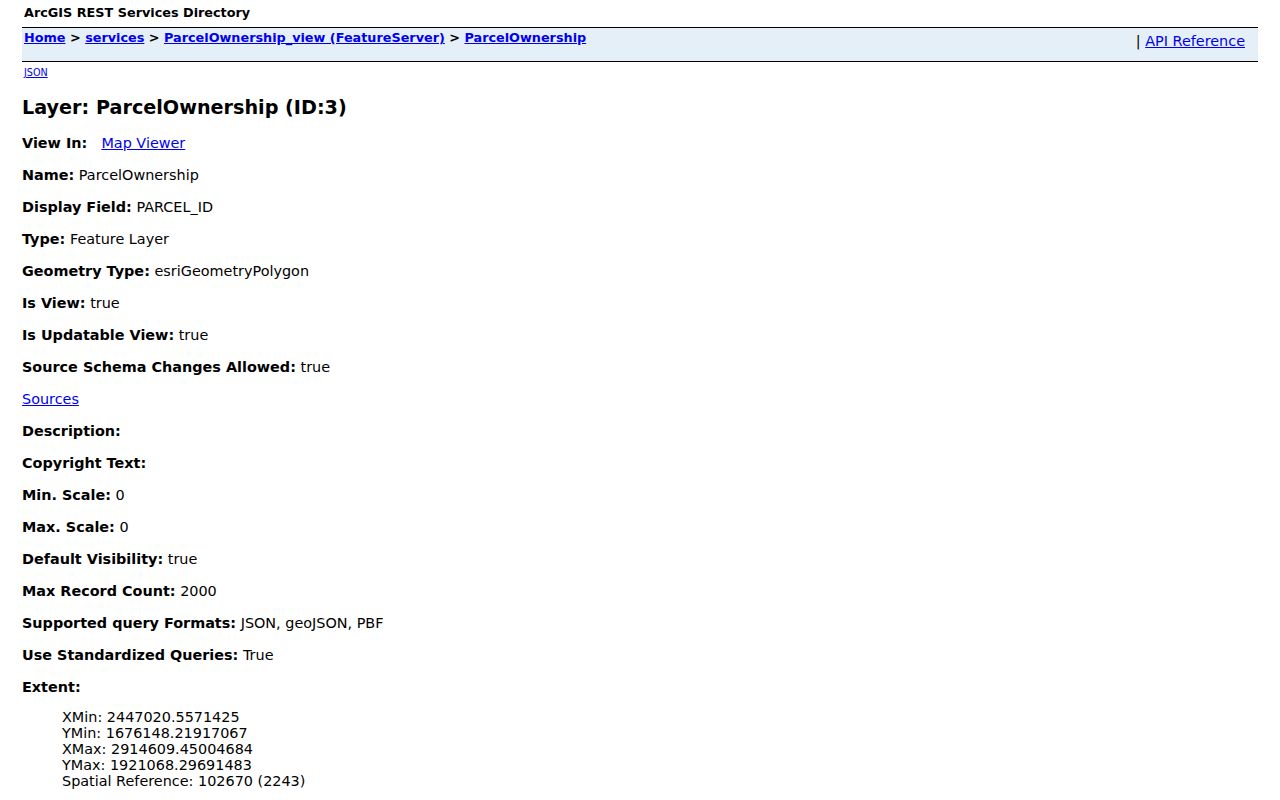
Read the fields as one dated card. A deed reference is only a pointer to an instrument, not a deed image or a title report.
Current Clearwater Dates Matter
Clearwater County publishes no fixed lag between a closing and the tax roll. The value year, effective date, deed date, and last-sale date give context rather than a freshness promise, so call the Assessor when they conflict.
Freshness check. A just-recorded deed can name the current owner before the next assessment or GIS update.
Keep the query date beside copied fields. A later update will then read as a change rather than a mistake.
Clearwater Situs and Mailing
One county sample pairs an Orofino situs on Holiday Drive with a Kendrick mailing address. Situs marks where the land sits. Mailing marks where notices go, and rural routes or out-of-county ownership can make both entries correct.
- Owner of record
- The name currently carried by an official ownership system.
- Assessment roll
- The Assessor's organized parcel and value record for a stated period.
- Situs
- The physical property address, when assigned.
- Recording lag
- Time between a deed's recording and its appearance in another system.
Confirm Clearwater's Current Owner
The newest recorded deed is the real check when the present owner matters. The county hosts no online deed-search interface, so ask the Recorder directly about any records cutoff.
- Open the parcel map and save the parcel ID, owner string, legal description, value year and deed date.
- Ask the Assessor to confirm the current owner and effective-date context.
- Contact the Clearwater County Recorder with those keys and request the newest vesting instrument.
- Match its grantee and legal description; if it is newer, ask when the Assessor entry will update.
- Owner of record
- The party carried by the current official record.
- Vesting
- How a deed states that ownership is held.
- Registered agent
- A business contact, not proof of land ownership.
Clearwater Companies and Trusts
A company owner needs a second lookup. Preserve the full name exactly. Then search Idaho SOSBiz by name or file number, since a registered agent is not automatically the owner, member, manager, or occupant.
A trust may list only its trustee. An estate can point to probate and a representative deed, with county court records and iCourt offering leads subject to access limits.
Protected Clearwater Owner Data
Idaho's Address Confidentiality Program gives qualifying survivors a substitute address, mail forwarding, and confidential voter registration. County fields can also be blank or redacted. That does not make the owner result false. Use the released record as shown, ask the custodian what is public, and never try to defeat a lawful protection by inference.
Assessor Confirmation Channels
The Clearwater County Assessor maintains the county's ownership and appraisal records. The office publishes no separate owner-search page. Bring a parcel ID, situs, legal description, and the exact owner string copied from GIS. Ask which name the roll carries now. Ask what date or roll year governs it and whether an update is known. The Assessor explains the administrative owner card and its timing. The Recorder holds the deed.
Federal and Exempt Parcels
Not every owner card looks like a house. A BLM sample carried a PLSS description, no situs, zero values, and blank sale and deed fields. Those blanks fit the parcel type. They say nothing about a private owner. Use the named public owner, the parcel ID, and the land description. Then consult the federal custodian, since government or exempt status explains missing sale, mail, or value clues.
Clearwater Deed Leads Only
The Deed1 through Deed5 fields speed a Recorder request. They do not show every instrument, lien, release, easement, or title issue, so copy references exactly and ask for the matching image or certified copy.
The Recorder takes counter, phone, and mail contact, and the fee PDF is dated, so confirm current charges before ordering.
Contact a Clearwater Property Owner
A roll mailing address is the public contact clue when the county displays it, without claiming the recipient lives there. Send a clear, property-related letter. Returned mail proves nothing about title.
Lawful use. Use current owner facts for property research; never stalk, harass, threaten, intimidate, or harm anyone.
The broader Clearwater property-owner method joins the address, roll, and deed checks. Title conclusions need the recorded evidence and qualified advice.
Clearwater Current Owner Review
A sound result identifies the parcel first. It reports the exact owner string. It separates situs from mailing, states the date context, and notes whether the newest deed was checked. Without the deed, call the name an assessment or GIS snapshot. Record any company, trust, estate, public body, or confidentiality marker. Uncertainty stays visible after a sale. Probate filings, entity transfers, and map changes all shift names. A documented result lets the Assessor reproduce the question from the same parcel and dates.
Recorder contact details.
The Recorder sits at 150 Michigan Avenue, Room 201, in Orofino. Mail goes to PO Box 586. Call 208-476-5615 during weekday hours of 8 a.m. to 5 p.m. Staff can work faster with the parcel key, the legal text, and names. A date window helps too. So does any GIS deed clue you already have.
A fee schedule from 2018 is linked on the fee page. Ask for the current charge, and say up front whether you need a certified instrument. A screen field and a certified deed do different jobs.
When recent transfer records conflict. Clearwater County systems do not always agree. The GIS map, the Assessor roll, and a recorded deed may point to different owners. Compare the recording date on the deed against the effective date on the tax roll. A deed often reaches the Recorder first. The Assessor updates the parcel record later. A correction instrument can explain the gap. A rejected filing or a mismatched parcel number can explain it too. Ask the Recorder whether the deed was accepted and indexed. Ask the Assessor which owner of record the parcel currently carries. Resist the urge to trust whichever screen looks newest.